


TLDR: Modern corporate giving software must support your company’s program mix, whether that includes matching gifts, volunteerism, payroll deductions, or direct corporate grantmaking. For the best results, prioritize platforms that offer seamless submission mechanisms, such as automatic gift-matching or integrated pre-tax payroll deductions, to eliminate user friction and achieve the greatest ROI from your philanthropic initiatives.
Does your company participate in corporate giving? If so, what tools are you using to power your initiatives? Dedicated corporate giving software is what separates a feel-good press release from a measurable, repeatable program, with the right platform turning employee generosity into sustained nonprofit funding.
If you haven’t yet, starting a giving program can lead to improved employee engagement, tax deductions, and the chance to positively impact your community. Still, knowing how to start a corporate giving program and actually starting one are two different things. CSR programs of any kind require in-depth planning, answering key questions such as what type of programs you’ll offer, how each one will be structured, if there are any legal requirements, and how you’ll sustain your efforts long-term.
Of course, the sheer variety of potential CSR programs also means there is a wide variety of corporate giving solutions to consider. To help your corporation invest in the right software, this guide will explore a few popular types of corporate giving programs and what kinds of tools you’ll need to power them. But first, we’ll review the “why” behind our recommendations.
Why should my company have a corporate giving program?
Starting a corporate giving program can create a positive feedback loop when it comes to attracting new employees and engaging current ones with its many benefits. These include:
Improved Reputation

Employees want to work for corporations they believe in, especially Gen Z employees who are entering the workforce en masse. With over half of Gen Z workers claiming they would take a pay cut to work at a business with ethics that align with theirs, a strong corporate giving program is a simple way to appeal to these socially conscious employees.
In addition to recruitment, improving your reputation through CSR has other benefits, such as:
- Positive customer perception. Just as employees want to work at businesses that make a positive difference in the world, customers want to spend money on brands that will use their dollars for social good. Publicizing your CSR efforts can improve your company’s reputation among consumers, leading to more business.
- Better work culture. When you attract employees who are interested in corporate giving, you build a team of individuals committed to social good. This can also be an effective way to engage remote employees in your workplace culture. These employees have few ways to connect with others, but they can still do their part to contribute to your corporate giving program.
- Marketing opportunities. When your corporation is known for making a positive difference in your community, more organizations will want to work with you. For example, nonprofits will ask for sponsorships in exchange for promoting your business, other businesses will want to be associated with yours, and employees will be happy to talk up your organization during their off hours.
Of course, for your corporate giving program to make a significant difference in your company’s reputation, you’ll need to promote it to employees, document your results, and share the impact with your community.
Increased Employee Motivation
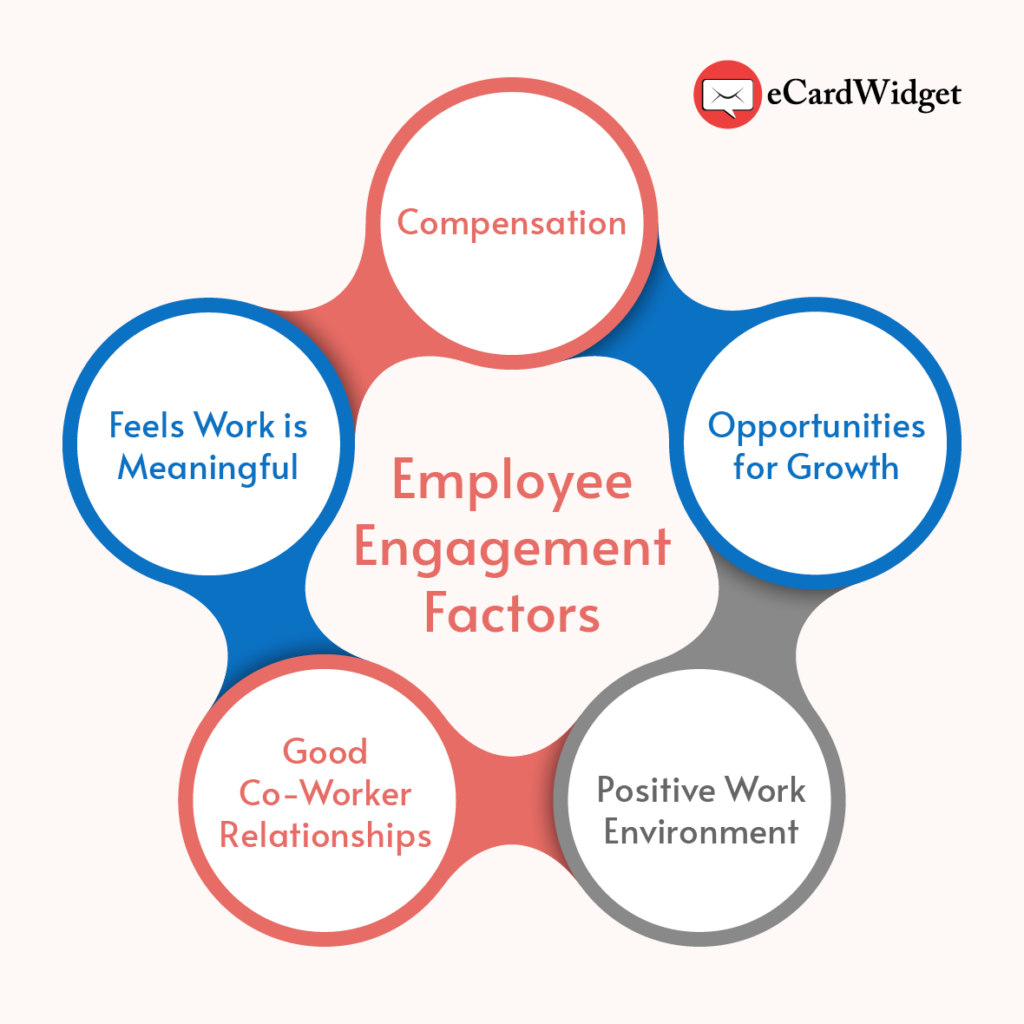
Employee motivation generally stems from several factors, such as compensation, opportunities for growth, a positive work environment, and good relationships with co-workers. Another important factor is whether employees feel their work contributes to a good cause.
While employees at for-profit companies know their work is being used to generate revenue first and foremost, they also want to know that excess profits are going to good causes.
Would you feel more motivated to work at an organization known for failing pollution scores or one that donates proceeds to cleaning up oil spills?
On that same note, CSR can help clean up a company’s reputation if it had missteps in the past. Committing to righting the wrongs of past leadership decisions can be an effective story that shows consumers and employees you’re dedicated to turning over a new leaf and building a more positive future.
Easy Benefits Package Addition
Employees consider a variety of factors when they look at compensation packages. These include salary, overtime pay, paid time off, and health insurance. To put your business over the top, be sure to highlight opportunities to participate in CSR programs.
Marketing your business as a generous employer that cares about the same causes its employees do can make you stand out to competitive talent. Just imagine the number of talented employees you’ll attract by offering competitive benefits and a corporate giving program.
Why should my company invest in corporate giving software?
The right tools can help your company maximize its philanthropic impact and encourage employees to complete their gifts. Plus, the availability of accessible and affordable tools opens corporate giving participation to a wide range of employers, according to Double the Donation.
The right tool can help you maximize the value of corporate giving by:
- Educating your employees. Many employees don’t know about corporate giving programs, which is why matching gift statistics indicate an estimated $4-7 billion goes unclaimed every year. With the right tool, employees can find your company’s corporate giving information directly from a nonprofit’s website after donating.
- Maximizing your impact. Supporters are more likely to donate when they know about matching gifts, but this knowledge also makes them more likely to give more. Industry research shows one-third of donors will give a bigger gift if they know a match is available, meaning your company can maximize its impact, too.
- Partnering with nonprofits. The right software can help you identify corporate giving opportunities and make your company a well-known contributor. By deepening your connection with charitable organizations, your company will become more than just a sponsor or program participant. You’ll engage in a long-term partnership to give back to your community.
Thoroughly vet your software options before settling on a solution. The right tool will aid your company’s unique philanthropic efforts and help you identify more opportunities to give. But the right tool for your team depends largely on the types of giving programs you plan to implement. Let’s review a few of the most popular examples!
Matching Gifts
What are employee matching gifts?
Matching gifts are a kind of corporate giving initiative wherein companies match employees’ nonprofit donations. Individual team members simply donate to causes they care about, report the donation to their employer, and the employer makes its own donation (usually an equal amount) to the same nonprofit.
Matching gifts are popular as employees can control what causes receive support, meaning they know your business is contributing toward issues they care about. When setting up a matching gift program, consider the following stipulations:
- What types of organizations will you match gifts for? Often, corporations add requirements based on organization type, such as matching for all nonprofits except churches and political groups. Others will have a specific philanthropic mission and only match gifts to organizations whose work fulfills that mission.
- Which employees are eligible for matching gifts? While full-time employees are usually match-eligible, consider whether part-time and retired employees can also have their gifts matched. Some particularly generous companies will even match gifts by employees’ spouses or dependents.
- Is there a minimum or maximum donation amount? Will you require employees to donate a minimum amount, and is there a maximum you will match? Does this maximum apply to individual donations, or will it be the threshold for the entire year?
- At what ratio will you match employees’ donations? Most corporations stick with a standard 1:1 ratio, meaning they’ll match donations dollar-for-dollar. However, some companies give at 2:1 or even 3:1 rates, while those with smaller budgets may give at just a 0.5:1 rate.
- When is the deadline to submit gifts? Common submission deadlines include a specific number of months after the initial donation was made (usually six or twelve), the end of the calendar year, and the end of the fiscal year. Some companies also establish grace periods, such as allowing gifts given in December to qualify for matches until the following April.
- What information do you need about the nonprofit to verify the gift? Most companies request employees provide the nonprofit’s name, address, and tax ID on their matching gift application. For the donation amount, some organizations let employees self-report, whereas others request a copy of the gift receipt.
Additionally, you’ll want to consider your total program budget, how employees will submit matching gift applications, who will review the applications, and how you’ll collect data to report on your program’s accomplishments.
What software do I need to match employees’ gifts?

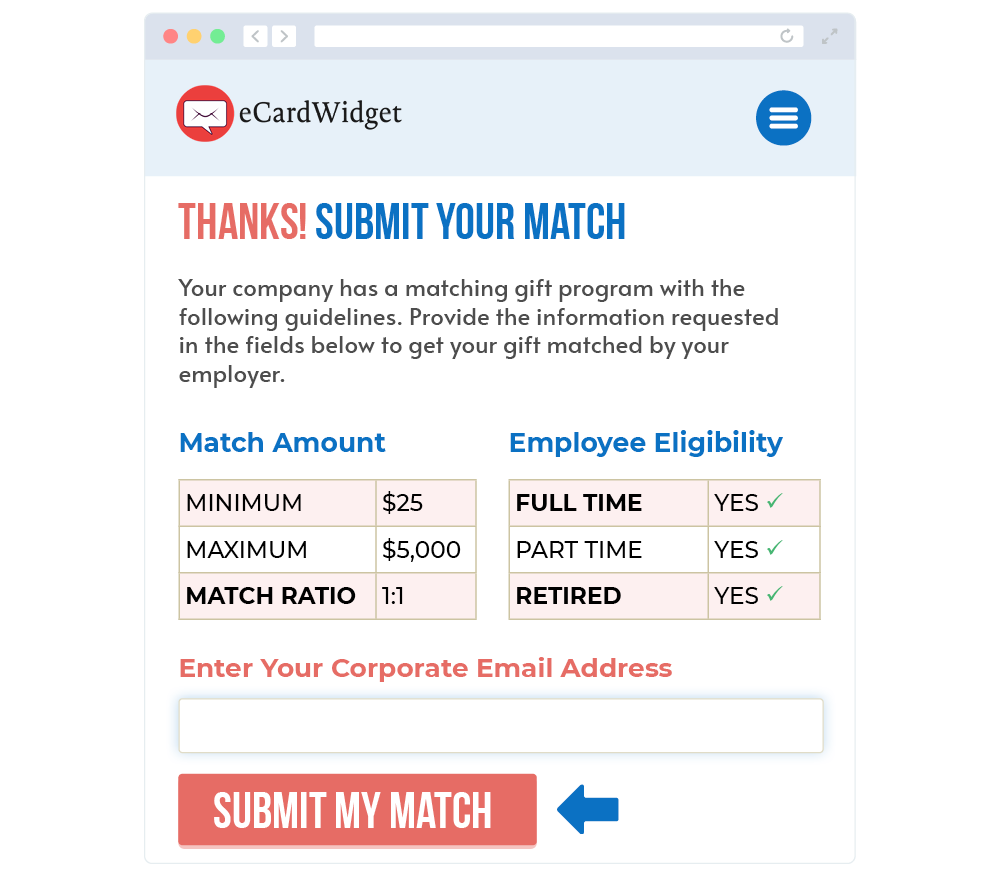
To launch a successful matching gift program, your company needs CSR software that streamlines the donation process and removes user friction. This type of tool essentially serves as a bridge between your business, your employees, and the charities receiving support. An intuitive tool lets you customize rules, such as dollar limits, eligible nonprofits, and match ratios, enabling staff to quickly search, review program guidelines, and submit their requests.
We recommend going the extra mile by choosing a CLMA-certified solution with matching gift auto-submission functionality. This allows eligible supporters to have their match request forms automatically completed. Suffice it to say, when employees have their matching gift applications completed in seconds, companies can expect participation in their workplace giving programs to rise.
Bonus! To avoid dilemmas stemming from a lack of employee awareness, add your programs to a corporate giving database like Double the Donation. That way, employees who donate to organizations using those search tools can look up your company’s name to receive relevant matching gift information in seconds.
Volunteerism
What is corporate volunteerism?
Corporate volunteerism includes a variety of ways companies can encourage their employees to get involved in their communities. Here are a few examples of corporate volunteer programs that might work for your organization:
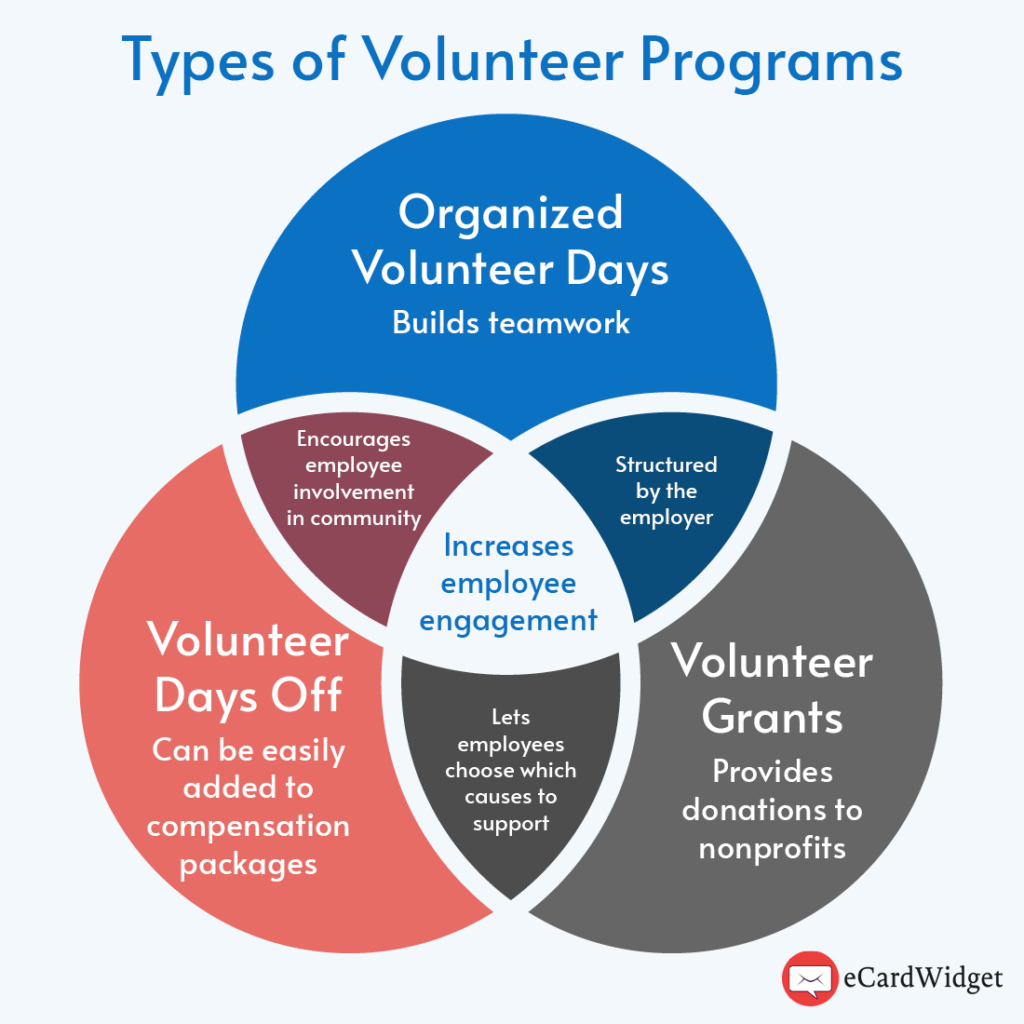
- Team volunteer days. Partner with a local nonprofit and host a corporate volunteer day. Your staff will volunteer together as a group, allowing them to enact social good and engage in team-building activities.
- Volunteer grants. Support your employees by donating to the nonprofits where they regularly volunteer. Similar to matching gifts, set requirements for what types of organizations you’ll provide volunteer grants for, how many hours employees must volunteer for to qualify, and how much you’ll give per hour volunteered.
- Volunteer time off. In addition to regular PTO, give employees a specific number of hours or days a year they can take off specifically to volunteer. To verify results, ask employees to provide the name of the nonprofit where they volunteered and a log of their hours served and/or activities completed.
Promoting volunteering is good for your community and your business. Studies show that employees who work at companies with employee volunteer programs are five times more engaged than their counterparts. Consider implementing one or more of these programs to boost your company’s reputation and workplace satisfaction.
What software do I need to facilitate volunteer programming?
While most CSR initiatives require a corporate giving platform that tracks donations, volunteer-related programs need the ability to track hours individual employees worked at various nonprofits. Create a time log that your CSR supervisor oversees, or take a more hands-off approach by letting employees report their own volunteer hours.
For volunteer grants, you will still need corporate giving software to verify nonprofits, accept volunteer grant applications, and distribute grant funds to approved applications.
Payroll Giving Programs
What are payroll giving programs?
According to Double the Donation, payroll deduction programs are the most common component of employee engagement across the CSR and corporate philanthropy landscape. These initiatives empower team members to donate directly to their favorite nonprofit causes through automated salary deductions, often on a pre-tax basis.
The result? A steady, predictable source of funding for charitable organizations and an easy way for businesses like yours to build a purpose-driven workplace.
What software do I need to enable payroll giving for employees?
To run a seamless payroll giving program without overwhelming your HR or accounting teams, you need modern software built for workplace giving automation. For the best results, look for a solution that integrates smoothly with your existing HR and payroll processing systems. This allows deductions to occur each pay period without manual entry, routing pooled funds directly to recipient charities on a set schedule.
Additionally, you’ll want to equip your employees with a self-service portal through which they can browse verified nonprofits, set their regular deduction amounts, and track their giving over time. The platform should also automatically handle matching payroll-facilitated donations so that you can offer this benefit to your employees which significantly increases participation.
Employee Assistance Funds
What are Employee Assistance Funds?
Employee Assistance Funds (EAF) are a unique method of corporate philanthropy that looks inward rather than focusing on the external community. Essentially, EAFs are created for a company’s employees in the event of financial hardship.
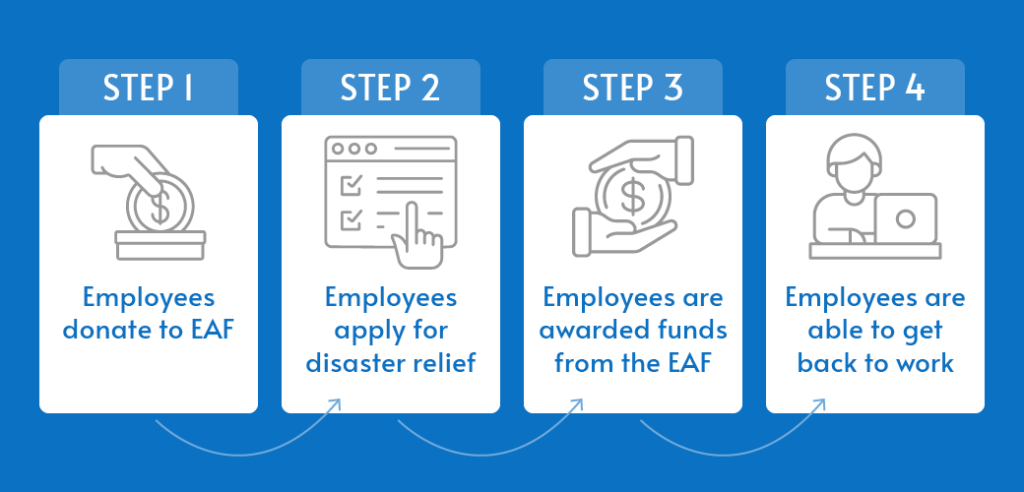
Here’s how they tend to work:
Step #1: Employees donate to an established EAF.Step #2: Employees apply for disaster relief support.Step #3: Employees are awarded funds from the EAF.Step #4: Employees can get back to work.
For example, a chain store may have branches across California, including locations that experience annual wildfires. In the event of a disaster, the employees at those locations may be out of work until the stores are safe to return to, and some may experience a disruption in housing. With an EAF, these individuals would receive financial benefits during this difficult time.
Additionally, there are a variety of ways an EAF can be set up as well, including:
- Private foundations. Private foundations provide corporations with control over how their EAF is funded and managed. However, awarded funds are taxable, and there are limits to the situations for which funds can be awarded (e.g., only disasters declared by the U.S. president or that fall under the Federal Emergency Management Agency).
- Public foundations. Public foundations provide the most flexibility in what can be considered a disaster and subsequently awarded funds. However, they must maintain the same structure as a 501(c)(3), meaning 50% of board members must be unrelated through blood, marriage, or business relations.
- Third-party organizations. Rather than starting an EAF from scratch, your company may partner with a nonprofit that already has experience managing and distributing funds in emergencies. Contributions to this charitable fund will be tax-free for your business and your employees, and relief funds given to employees can be included in corporate write-offs.
Employee Assistance Funds also offer several other benefits, including establishing a sense of teamwork and camaraderie, protecting employee privacy in situations where they may need support, and offering clear incentives for team-wide participation.
What software do I need to establish an EAF?
If you’re interested in setting up an in-house Employee Assistance Fund, you’ll need solid financial management tools. Our recommendation? Look for a CSR platform that allows your team to…
- Collect donations. Allow employees to give through your CSR interface. Some corporations encourage employees to opt in by signing up for automatic paycheck deductions that are added to the EAF.
- Process applications. Use a CSR platform that allows you to create application forms employees can submit if they need help from the EAF. Choose a platform with strict security measures to protect your employees’ confidentiality.
- Distribute funds. Manage the total amount in the EAF to decide how funds are allocated and distributed to specific applicants.
Ensure your CSR platform is user-friendly enough that employees can interface with it to make additional donations at their leisure. Additionally, businesses with multiple locations will need a flexible platform that lets them track large funds and make strategic decisions about awarding them to benefit the most employees possible.
Grants & In-Kind Donations
What is a corporate grant or in-kind donation?
Beyond employee-driven workplace giving programs like matching gifts and payroll deductions, many companies offer direct support through corporate grants and in-kind donation programs. These contributions allow businesses to invest their financial capital, goods, and professional services in local communities and other mission-aligned organizations.
What software do I need to offer corporate grants and in-kind gifts?
To manage corporate grants and product donations efficiently, companies need CSR and corporate grantmaking software built to handle inbound requests. These solutions are designed to streamline the evaluation process and eliminate manual paperwork for corporate giving teams.
We recommend seeking a platform that offers custom online application portals, automated eligibility screening, application review and scoring workflows, and fund distribution and tracking capabilities.
Scholarships
What is a corporate scholarship?
Scholarships are designed to help low-income students complete higher education without taking on massive financial burdens. Corporate scholarships in particular are those provided to college students by a corporation rather than government or foundation grants.
Some corporate scholarship programs have requirements for the students applying. One common requirement is that they have parents who work for the business in some capacity. Similar to EAFs, this limitation can actually increase employee buy-in as they know they’ll be investing in their own children’s education whenever they donate to the scholarship fund.
What software do I need to offer corporate scholarships?
To run a scholarship program, businesses need corporate giving software with the following features:
- User-friendly donation portal
- Ability to create application forms
- Ability to distribute funds to applicants
- Reporting tools to monitor impact
Additionally, organizations interested in a scholarship program should consider using software that facilitates the application review process. This might involve making applications anonymous to avoid potential bias, enabling multiple reviewers to leave comments on applications, and creating a weighted score based on judging criteria.
Additional Corporate Giving Software Resources
The best corporate giving program for your company depends on your employees, business model, and overall company values. Whichever program you launch, ensure you have software that backs up your efforts and makes participation easy.
Of course, this is just the beginning when it comes to the wide world of corporate giving software. To learn more about how to establish your program, how to connect with employees, and what tools to invest in, explore these resources:
- A Guide to Building a Strong Workplace Culture Remotely. Remote employees are also part of your company and have the potential to participate in corporate giving as well. Learn how to bring them into your company culture of giving.
- 10 Best Remote Work Software Solutions To Boost Engagement. Software shapes your ability to engage with remote and hybrid workers. Discover 10 platforms to improve communication and collaboration with these remote employees.
- A Complete Guide to Employee Engagement + Top 10+ Ideas. Establishing engaging, employee-led corporate giving programs is one of the best ways to boost team-wide engagement across your workforce. Explore some of our other favorite ideas here!